Training & Support


Application Portfolio Management
Optimize Your APM Landscape
Govern your application landscape effectively by understanding how each application integrates with your business operations and contributes to your organization’s ROI.


Reduce Cost
- Eliminate redundancies
- Optimize licensing
- Minimize technical debt
- Maximize TCO and ROI


Minimize Risk
- Manage security vulnerabilities
- Ensure compliance
- Prevent disruptions
- Enhance IT governance and visibility


Scale IT Ops
- Optimize resources
- Leverage cloud investments (Azure, DevOps, SharePoint)
- Support business growth
- Streamline processes and IT integration


Collaborate
- Align Business and IT
- Increase transparency
- Enhance governance and accountability
- Facilitate better decision-making
A Single Window for End-to-End Application Portfolio Management
Aging application and software portfolios need more attention than budgets allow and take the focus off the future.
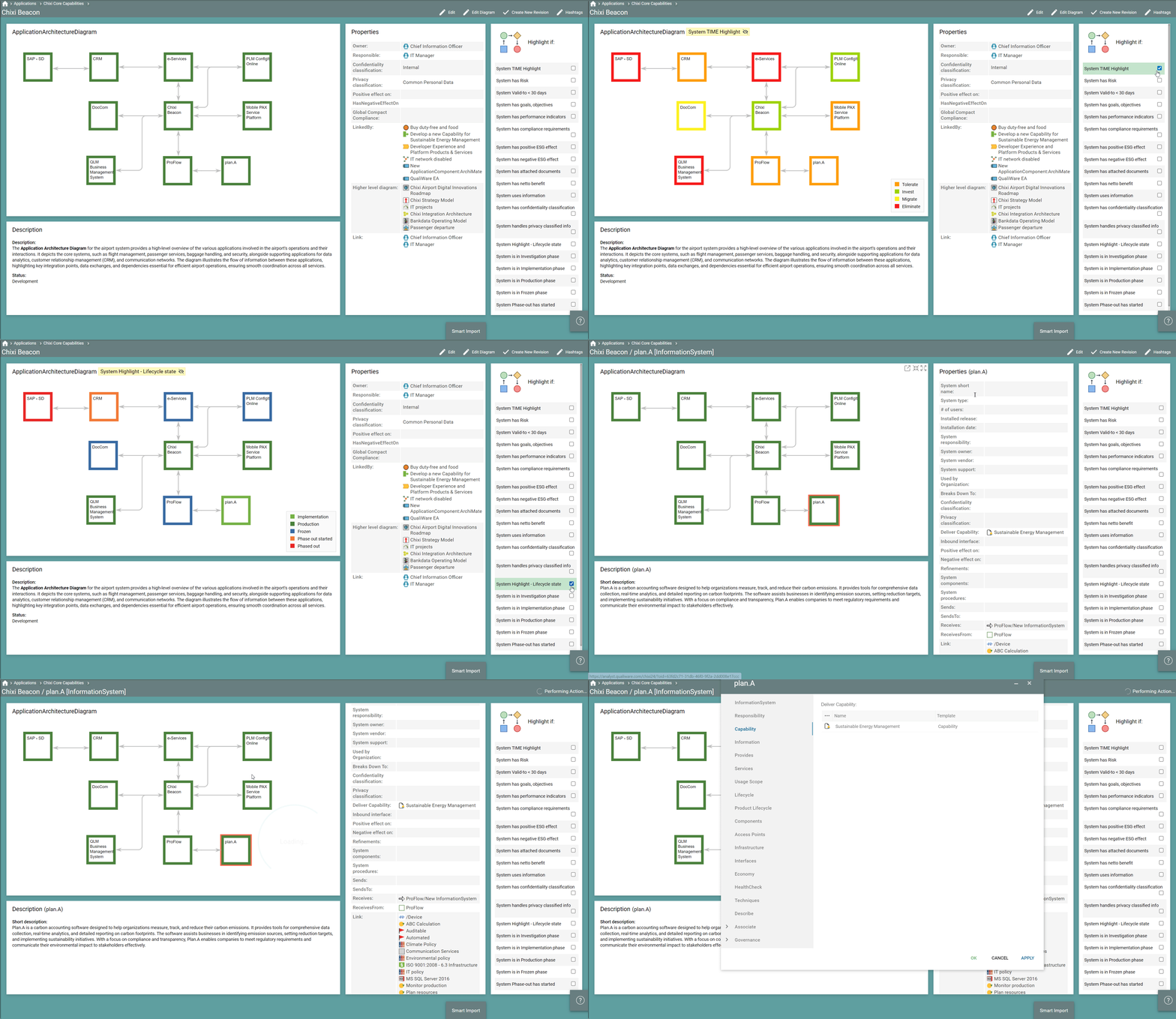
Assess technical debt and visualize your application portfolio with the Gartner® TIME Model.
Understanding each applications contribution to business capability delivery is key to IT planning and reducing technical debt.
A strategic approach to Application Portfolio Management (APM) enables organizations to make informed decisions on which applications to retain or remove.
CloseReach's innovative approaches help you drive stronger, more sustainable business and IT performance.


Learn how a retail powerhouse leverages QualiWare to stay ahead
Read Success Story
"The benefits are evident: we have an overview, we have control of our processes and applications, and we know who is responsible for what."


Optimize Your IT Ecosystem with Smarter Lifecycle Management
Book a Demo
CloseReach's lifecycle management solution optimizes your IT landscape by providing clear application visibility. Reduce costs, eliminate redundancies, and retire legacy apps on time to improve cyber security stay future focused.
Invest 3 Minutes to See How QualiWare Can Help You Manage Your Applications
Contact Us Today!
Ready to accelerate your digital transformation and maximize ROI on your technology investments? Contact us today to learn how our Application Portfolio Management Solution can help your organization scale, innovate, and succeed.
FAQ
-
Application Portfolio Management (APM) is the practice of cataloging, evaluating, and managing all software applications used across an organization.
It provides visibility into the entire application landscape, including application ownership, lifecycle status, business value, technical dependencies, and operating cost.
By maintaining a structured application inventory, organizations can understand which systems are:
- Critical to operations
- Redundant or underutilized
- Approaching end-of-life
- Candidates for modernization or retirement
APM enables IT and business leaders to make informed decisions about technology investments, modernization initiatives, and risk management.
-
Most organizations operate hundreds or even thousands of applications, many of which were implemented over decades.
Without structured oversight, this environment often leads to:
- Duplicate applications performing similar functions
- Rising licensing and maintenance costs
- Unsupported or aging systems
- Limited visibility into application dependencies
Application Portfolio Management helps organizations bring structure and transparency to their application landscape, allowing leadership to control costs, reduce risk, and align technology investments with business strategy.
-
Application Portfolio Management addresses several common IT challenges:
Application sprawl
Organizations often accumulate overlapping systems that perform similar functions.Lack of visibility
Many companies do not have a complete inventory of the applications running across departments.Rising operating costs
Legacy applications can consume large support budgets without delivering business value.Technology risk
Unsupported systems may expose organizations to security vulnerabilities and operational failures.APM provides the data and analysis needed to rationalize applications, reduce complexity, and improve IT decision-making.
-
Application Portfolio Management focuses specifically on the inventory and lifecycle management of software applications.
Enterprise Architecture (EA), on the other hand, provides a broader framework for aligning business strategy, technology systems, processes, and data.
In many organizations, APM is considered a core capability within Enterprise Architecture.
EA tools such as QualiWare allow organizations to manage application portfolios while also linking applications to:
- business processes
- data architecture
- infrastructure platforms
- strategic initiatives
This integrated view helps organizations understand how applications support the broader enterprise architecture.
-
Application Portfolio Management identifies opportunities to eliminate redundant, obsolete, or low-value systems.
By analyzing the full application portfolio, organizations can:
- retire duplicate applications
- consolidate platforms performing similar functions
- reduce licensing costs
- simplify maintenance and support
Many organizations discover that 10–30% of their applications can be retired or consolidated once the portfolio is fully analyzed.
Reducing the number of systems lowers operating costs while also simplifying the IT environment.
-
Application Portfolio Management strengthens governance by providing clear visibility into the applications operating within an organization.
With a structured portfolio, organizations can easily determine:
- who owns each application
- what data it processes
- whether it meets security standards
- whether it remains supported by vendors
This visibility supports risk management, audit readiness, and regulatory compliance, particularly in industries with strict governance requirements.